


Supermarket Idle: Simulator
4.4363.00 Reviews
App Specs
- Version
- 1.02.14
- Updated On
- License
- Free
- Downloads
- 500,000+
- Developer
- Apps Mobile Games
- Categories
- Simulation
- Platform
- Android
Screenshots
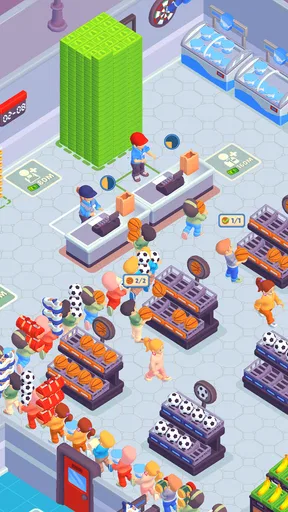
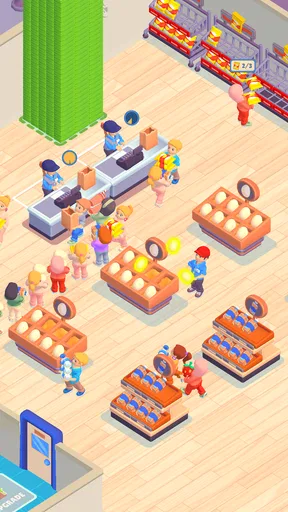
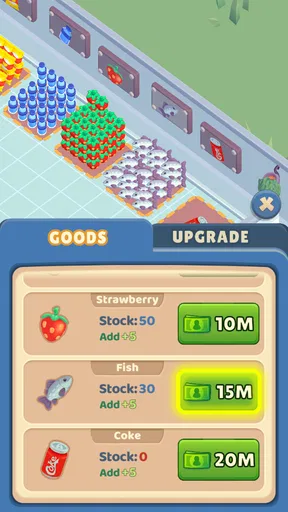
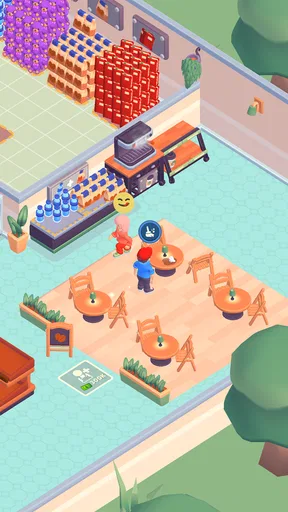

 Analysis by AppCompare
I spent time with Supermarket Idle: Simulator as a small, low-pressure management game, and its appeal became clear quite quickly: it turns the ordinary work of running a supermarket into a series of simple choices that gradually shape an expanding business. You begin with the basic idea of serving shoppers and improving the store, then keep returning to make the next useful upgrade. It is easy to understand, but the better experience comes from deciding what deserves attention first rather than tapping every available option without a plan.
This is a free simulation game from Apps Mobile Games, aimed at Everyone, and it has already attracted over 500 thousand installs. Its average rating is 4.4 from around 15 thousand ratings, which fits my impression of the game as an accessible idle title rather than a demanding business simulator. The current version is 1.02.14, and it requires Android 12 or later. Those details matter if you are looking for something modern and lightweight to check during short breaks, but they also set expectations: this is designed for convenience, not for the complexity of a full management sandbox.
How the supermarket decisions work
The central decision is not simply whether to upgrade. It is deciding which improvement will make the next few minutes more productive. A larger-looking store is not automatically a better store if your progress depends more on keeping the basic operation moving. I found myself weighing immediate gains against improvements that would make later progress smoother. That small delay between spending resources and seeing the benefit gives the game its main sense of planning.
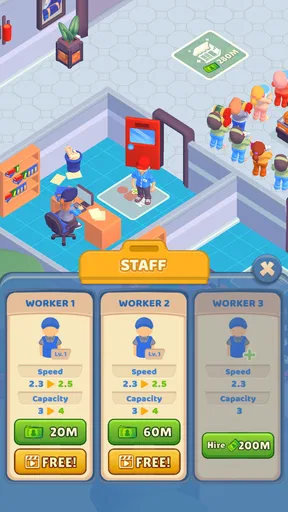
The worker and manager perspective also gives the game a useful change of scale. You are not only imagining the supermarket from above; you are also thinking about the routine that keeps it functioning. That makes the early stages feel more personal than a purely numerical idle game. I paid attention to what seemed to help the shop grow, then used the next return to make a focused improvement instead of scattering progress across every possible direction.
A practical way to play is to choose one short-term objective before leaving the game. For example, I might decide that the next session is about improving the store's earning pace, while the following session is reserved for expanding its overall capacity. This prevents idle games from becoming a string of meaningless taps. The game does not need complicated controls to create a decision space; it needs you to notice that timing and priority affect how satisfying the progress feels.
The most useful habit is to spend with a purpose, not simply because an upgrade button is available. That sounds obvious, but it changes the rhythm considerably. If you spend everything immediately, you may get a quick visual reward while losing the ability to make a more meaningful improvement shortly afterward. Holding back for a planned step can feel slower, yet it often makes the next return more rewarding.
Why the idle format suits this setting
A supermarket is a natural setting for an idle game because the imagined activity never really stops. Customers arrive, the shop operates, and the manager has another improvement to consider. I liked that the theme gives the waiting period a reason to exist. Instead of feeling like a random counter increasing in the background, progress feels connected to keeping a business alive and gradually making it more successful.
Worth Reading Before You Choose

Flipboard Shows What News Apps Must Do Beyond the Feed

Switching to Android Auto Means Rethinking Your Driving Routine

Google Calendar Makes a Crowded Week Easier to Manage

Ludo King Makes the Most of the Minutes Between Plans

Baby Panda World Brings Quick Play to Modern Phones, but Its Game Library Feels Busy

ESPN’s Live Game View Makes Following Close Games Easier
This also makes it a good fit for everyday use. I could open it while waiting for a train, check the store during a short lunch break, and close it without needing to remember a complicated sequence of actions. A longer session works when I want to make several decisions in a row, but the game does not demand that I stay focused for a long uninterrupted period. That flexibility is one of its strongest qualities.
There is a trade-off, though. Players who want detailed staffing schedules, supply chains, customer behavior, or a highly reactive economy may find the supermarket theme more appealing than the actual depth of the simulation. The game presents the fantasy of becoming a store manager, but it is best understood as a streamlined progression game. If you are choosing between this and a traditional management simulator, choose this one for quick decisions and steady growth, not for spreadsheets and operational realism.
Planning around short and long horizons
I found it helpful to separate decisions into two horizons. The first is the next visit: what can make the immediate session feel productive? The second is the longer arc: what kind of supermarket am I trying to build over repeated returns? Without that distinction, it is easy to chase every small reward and lose sight of the larger progression.
For a short horizon, I would favor an improvement that creates a noticeable change in the current run. For a longer horizon, I would tolerate a less exciting choice if it appeared to support the store's continued growth. This is where the game becomes more thoughtful than its simple presentation suggests. The interesting question is not whether a purchase is good, but whether it is good now, good later, or only attractive because it is immediately visible.
Another useful approach is to stop a session after reaching a clear milestone rather than continuing until every resource is gone. That leaves a reason to return and makes the next opening feel intentional. I also recommend checking the effect of an improvement before making several similar purchases. In an idle game, a small difference in efficiency can matter over many visits, while a cosmetic or low-impact choice may be better saved for when the core operation already feels comfortable.
Where risk and reward enter the loop
The risks here are gentle rather than dramatic. You are not facing a sudden disaster that destroys the supermarket. The more common risk is opportunity cost: choosing one improvement means postponing another. That makes the game approachable for younger players and casual users, but it still gives experienced idle-game players something to think about. The pressure comes from making progress feel efficient, not from surviving punishment.
I noticed that the most tempting choice was often the one that promised an immediate sense of expansion. Bigger progress looks satisfying, especially when returning after time away. Yet the best choice for my next session was not always the most visible one. Sometimes a quieter improvement seemed more valuable because it supported the store's basic flow. This is a familiar idle-game lesson, but the supermarket setting makes it easy to understand: a larger shop is not useful if the underlying operation cannot keep pace.
The reward structure works best when you treat each return as a small review of your previous plan. Did the last improvement make the shop feel faster or more productive? Did it merely move the numbers without changing the way you play? Answering those questions helps you avoid spending automatically. It also creates a mild form of counterplay against the game's own temptation to keep clicking: you become the person deciding when a reward is actually worth claiming.
Free access makes the game easy to try, but the presence of in-app purchases ranging from $1.99 to $99.99 per item is important to keep in mind. I would approach those purchases cautiously. The free structure is enough to sample the core loop, and paying should be a personal convenience decision rather than something you assume is required to understand the game. Anyone who dislikes premium prompts in idle games should be prepared for that part of the experience before committing to a long progression.
My advice is to play the early stages without spending money and first decide whether the basic rhythm suits you. If you enjoy checking the shop, choosing upgrades, and watching a business grow gradually, you may find the optional purchases easier to judge later. If the unhurried pace already feels too slow, paying to accelerate it will not necessarily fix the underlying mismatch. That is the key trade-off: purchases can make waiting more comfortable for some players, but they cannot turn a simple idle simulator into a detailed management game.
Adapting instead of following one fixed plan
One thing I appreciated is that a single opening strategy does not have to control the whole experience. Your priorities can change as the supermarket develops. Early on, I cared more about establishing a reliable rhythm. Later, I became more interested in whether the next improvement would support continued growth rather than simply provide a quick boost. That shift is small, but it keeps the game from feeling completely automatic.
Adaptation is especially useful when you return after a gap. Instead of spending immediately, take a moment to see what the store can currently support. A plan that made sense during the previous session may no longer be the best one after progress has accumulated. I like using the first minute of a return as an inspection period: collect what is available, look at the next meaningful target, and only then decide where to put the results.
This method also helps answer a common question: can you play casually without falling behind? In my experience, yes, provided you accept that the game is built around gradual growth. You do not need to treat every return as an optimization challenge. A casual player can choose a simple priority, make one or two decisions, and leave. The cost is slower progress compared with someone who checks more often or plans every purchase, but the game remains comfortable when played at that pace.
On the other hand, players who need constant reaction and surprise may not find enough adaptation here. The pleasure comes from adjusting priorities within a steady framework, not from unpredictable events or high-stakes emergencies. That makes it relaxing, but it also means the game may lose its appeal if you want every session to introduce a new problem.
What changes over repeated sessions
The long-term strength of the game is the feeling of accumulation. A small improvement may not seem important in isolation, but repeated returns make the supermarket feel like a project rather than a single play session. I enjoyed looking back at the store's development and recognizing that progress came from many modest decisions. That is the same reason people enjoy other idle games: the reward is partly in seeing a once-basic operation become more established.
Still, depth over time depends heavily on your tolerance for repetition. The basic loop remains deliberately simple, so the game is not constantly reinventing itself. If you enjoy a familiar routine with occasional choices, that consistency is a strength. If you expect a deep new layer every time you advance, the simplicity can become a limitation. I would describe the progression as steady rather than surprising.
Compared with the usual alternatives in the simulation category, this game sits closer to a relaxed idle tycoon than to a full city builder, restaurant manager, or business strategy title. A restaurant game may focus more on service speed and menu decisions; a city builder usually asks you to balance several connected systems; a conventional tycoon game may offer more detailed finances and competition. This supermarket game is easier to pick up because it narrows the fantasy to one growing shop, but that focus naturally reduces the number of systems you can control.
That comparison helps identify the right audience. I would recommend it to someone who wants the satisfaction of management without the burden of managing a complicated economy. I would not choose it for a player who wants to design a detailed floor plan, negotiate with suppliers, or respond to a constantly changing market. The supermarket theme is pleasant and understandable, but the game works because it simplifies those responsibilities rather than simulating them in full.
Who should play it and who should skip it
This is a good choice for casual simulation fans, idle-game newcomers, and anyone who likes checking a project in short bursts. It is also suitable for families looking for an Everyone-rated game with a straightforward premise. The manager role gives children an easy story to follow, while adults can enjoy the light planning involved in choosing what to improve next.
I think it is particularly well suited to people who like progress that continues between sessions. If you prefer games where a few minutes can still feel worthwhile, the supermarket format works well. You can make a decision, leave, and return later with a reason to inspect the results. That makes it more convenient than a typical hands-on simulation that expects sustained attention every time you open it.
I would skip it if your main goal is realism. The store summary presents a path from worker to manager and eventually to a tycoon-style empire, but the enjoyment comes from simplified progression rather than authentic retail operations. I would also skip it if you dislike idle mechanics, repeated upgrade decisions, or optional purchases in free games. Those are not side details; they are part of the experience's identity.
Device compatibility is another practical consideration. Since the game requires Android 12 or later, anyone using an older Android device should check compatibility before planning to play. For supported phones, the current version, 1.02.14, makes it a straightforward modern option to try, but the age requirement means it is not universal across every Android handset.
My strategy verdict after building the store
My final impression is positive, with a clear understanding of its limits. Supermarket Idle: Simulator succeeds when I treat it as a calm planning routine: return, inspect the shop, choose a priority, spend carefully, and leave with the next objective in mind. It is less successful when I expect a deep retail simulation or constant novelty. The game knows what kind of experience it wants to provide, and its simplicity is both the reason it is approachable and the reason some players will eventually want more.
The best way to enjoy it is to resist rushing the entire progression. Let the supermarket develop through deliberate choices, compare the effect of one improvement with the next, and avoid assuming that every available purchase deserves immediate attention. That creates more meaning in the waiting periods and gives your returns a practical purpose. It also lets you judge the free experience fairly before considering any optional purchase.
For me, the strongest use case is a short daily check-in rather than a marathon session. I can play while waiting, make a sensible management decision, and return later without feeling that I have missed a complicated event. The weakest use case is a long evening spent looking for rich strategy, because the game's systems are intentionally lighter than those of a full tycoon simulator.
Apps Mobile Games has made a friendly, accessible simulation for players who want to grow a supermarket without handling every detail of retail management. With a 4.4 average and over 500 thousand installs, it has clearly found an audience for that approach. I would recommend trying the free version if you enjoy incremental progress and simple business decisions. Just go in knowing that the real challenge is prioritizing gradual improvements, not mastering a complex economic model. For that specific purpose, it is an enjoyable little store to manage.
Pros
- Simple idle mechanics make it easy to play in short sessions.
- Store upgrades create a satisfying sense of steady progress.
- Bright visuals and clear menus are suitable for casual players.
- Offline earnings let the supermarket continue generating income.
- Multiple departments add variety as the store expands.
Cons
- Progress can become repetitive after the initial expansion phase.
- Upgrade costs may encourage frequent waiting or ad viewing.
- Offline rewards are limited and may feel slow for active players.
- The simulator offers little strategic depth beyond upgrading facilities.
- Some features may be locked behind in-app purchases or advertisements.
FAQs for Supermarket Idle: Simulator
What is Supermarket Idle: Simulator?
Supermarket Idle: Simulator is a casual management game in which you build and operate your own virtual supermarket. You are responsible for expanding the store, stocking shelves, improving departments, serving customers, and increasing revenue. Its idle mechanics allow the business to continue generating progress while you are away, making it suitable for players who enjoy relaxed, incremental gameplay rather than fast action or complex controls.
How do you play Supermarket Idle: Simulator?
The main gameplay revolves around upgrading your supermarket and making decisions that improve its performance. You typically unlock new products or departments, increase shelf capacity, improve checkout and customer service, and use earned money to expand the store. The controls are designed for mobile devices, so most actions involve tapping menus, collecting rewards, and selecting upgrades. Progress becomes more efficient as you prioritize improvements that increase income and customer flow.
Does Supermarket Idle: Simulator require an internet connection?
The game may allow some basic activities to work without a constant connection, but online access can be important for advertisements, bonus rewards, cloud-related features, updates, and certain promotional content. Offline behavior may also differ depending on your device and the version installed. Before relying on it during travel, it is best to test the game in airplane mode, since idle earnings or reward systems may not function exactly the same way offline.
Is Supermarket Idle: Simulator free to download and play?
Supermarket Idle: Simulator is generally available as a free mobile download, allowing players to begin building a supermarket without paying upfront. However, free-to-play games commonly include optional advertisements and in-app purchases. These may provide extra currency, speed up construction, remove ads, or offer special rewards. You can usually progress without spending money, although patience and regular play may be required to reach upgrades more quickly.
Is Supermarket Idle: Simulator suitable for children?
The game is generally easy to understand because it uses simple management mechanics, colorful visuals, and straightforward tap-based controls. Nevertheless, parents should review the age rating and store listing before installation, particularly because the game may contain advertising, optional purchases, or links to other content. If children play, enabling parental controls and restricting in-app purchases is recommended to prevent accidental spending.


